

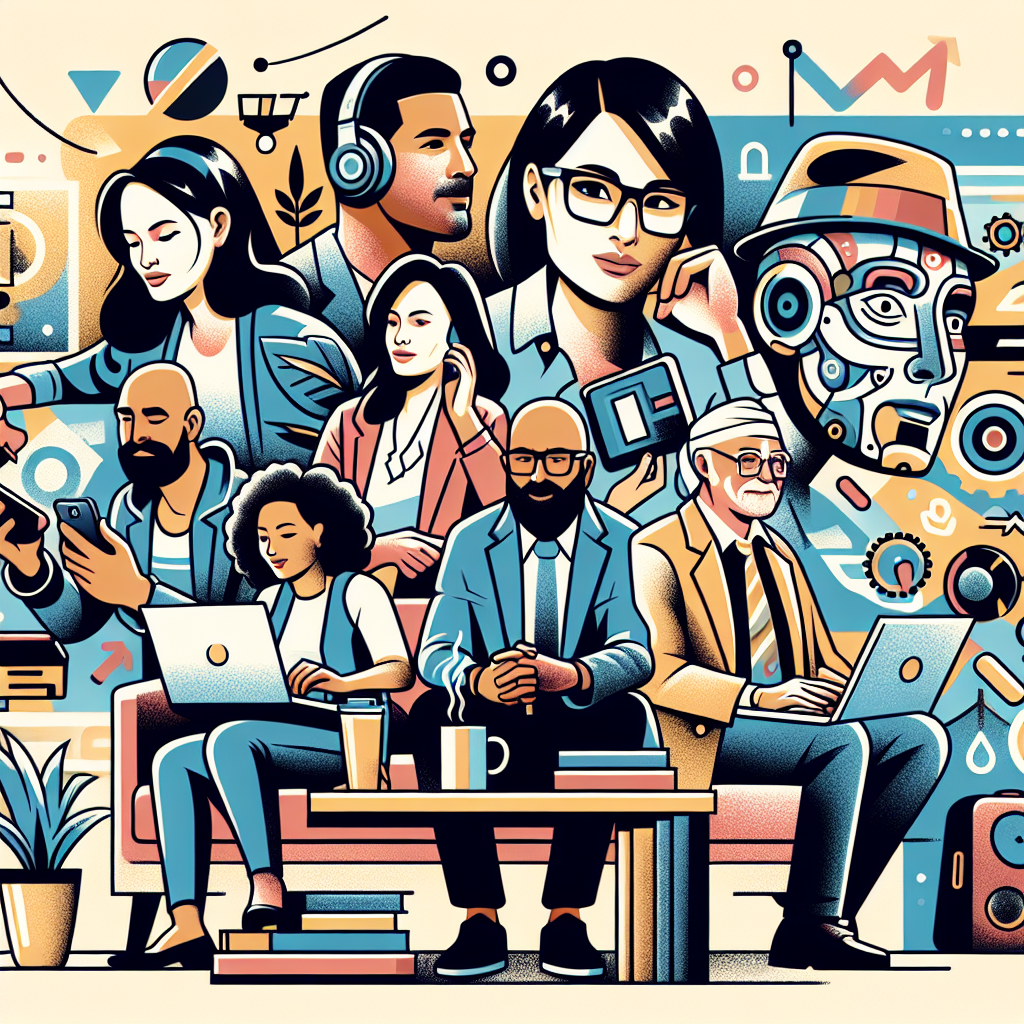
How a Legacy Agency Reinvented Itself for the AI Age
Artificial intelligence is already disrupting the digital industry—from marketing automation to product design—and for legacy businesses rooted in pre-digital processes, the question isn’t if you adapt, it’s how. One such transformation story comes from Archer+Winslow, a mid-size creative agency established in 1996, known for traditional branding campaigns and print media. Facing declining revenues and declining relevance, the agency embarked on a calculated pivot to integrate AI into its workflows. This case study unpacks their journey and lays out a grounded framework for other professionals wondering how to adapt to AI in your business.
Step 1: Acknowledge What’s Broken
In 2021, Archer+Winslow operated like many agencies founded before the dot-com boom: spreadsheets for tracking, intuition over analytics, and an over-dependence on big-ticket campaign contracts. When they lost two major legacy clients due to pricing and “inflexibility,” the founders knew they couldn’t discount the warning signs any longer.
They began by confronting their operational limitations: campaign timelines were too long, budgets were ballooning, and results lacked the real-time feedback today’s clients demanded. More telling, they realized many competitors were using automation and AI to offer faster, cheaper, and more customized services.
Step 2: Trim the Fat, Then Invest Smart
The leadership team resisted the urge to invest in AI tools right away. First, they conducted a full audit of internal processes. They shut down redundant divisions and implemented basic process automation—automating invoice tracking, using collaborative software for project timelines, and replacing “gut-based” presentations with data-backed proposals.
Only then did they move toward AI tools. But not indiscriminately. They focused on three initial areas: copy generation, market forecasting, and media planning. For example, they trained their content team to use AI writing assistants not to replace creative output, but to accelerate ideation rounds and generate initial drafts—cutting time spent by nearly 40% per project.
Step 3: Reskill, Don’t Replace
Internal skepticism was strong—particularly from tenured creatives and account managers afraid of being replaced. Instead of outsourcing AI implementation to a tech consultant, Archer+Winslow brought in a fractional AI strategist who helped rewrite job descriptions across departments.
The focus was on augmentation, not automation: Designers learned to iterate ideas faster using image generation tools; strategists used predictive models for campaign insights; account managers leveraged AI CRM tools to anticipate client needs. Staff retention actually improved, as employees felt the agency was investing in their future rather than replacing them.
Step 4: Test AI With a Low-Risk Client
To prove viability, they launched a pilot AI-driven campaign for a pro bono non-profit client. They used sentiment analysis to craft messaging, optimized deployment using AI-based behavioral modeling, and measured engagement in real-time. Not only did the campaign outperform previous efforts, but it also provided the internal case study needed to win buy-in across the organization—and with more risk-averse clients.
Step 5: Shift the Business Model
By mid-2023, Archer+Winslow had transitioned from a project-based model to an agile, data-first service model. Contracts were restructured to include ongoing AI optimization. Clients could opt into “AI Labs” packages that offered rapid prototyping and A/B testing of messaging, with month-over-month adjustments based on model feedback.
This new model didn’t just save clients money, it gave them more control—a crucial factor in retaining tech-savvy marketing managers at startups and direct-to-consumer brands.
Step 6: Stay Human on the Front Lines
Throughout all stages, the leadership maintained one core principle: let tech do the heavy lifting, but keep people at the helm. Account managers were encouraged to double down on empathy during client conversations. All client-facing narratives were vetted for tone, relevance, and cultural nuance—something AI tools still fail to do consistently.
Even as AI tools matured, Archer+Winslow found that human trust and intuition still sealed the deal. Their best-performing campaigns? Those where AI served as a backstage assistant, not the star of the show.
How You Can Start Today
If you’re a Pre-Xennial professional wondering how to adapt to AI in your business, take a page from Archer+Winslow. Don’t wait for a full strategy overhaul before you begin. Start with a pain point—emails that take too long, social campaigns that lack clarity, client briefs that require hours of analysis—and see if there’s an AI-enabled fix.
Ask these three questions:
- What repetitive tasks are draining your team’s creativity?
- Where are you relying on assumptions instead of data?
- Which part of your workflow needs speed or scale?
From there, look at generative AI tools, client data platforms, or even no-code AI solutions that plug seamlessly into your operations. And don’t forget: upskilling your team is part of the investment—not an afterthought.
AI won’t steal your job. But someone who knows how to use AI will.
Archer+Winslow turned a crisis of relevance into an innovation story. So can you. Just start with a grounded, problem-first mindset and build from there. AI isn’t the enemy of legacy—it’s the unlock button.
Leave a comment below: What’s holding you back from adapting AI in your business?